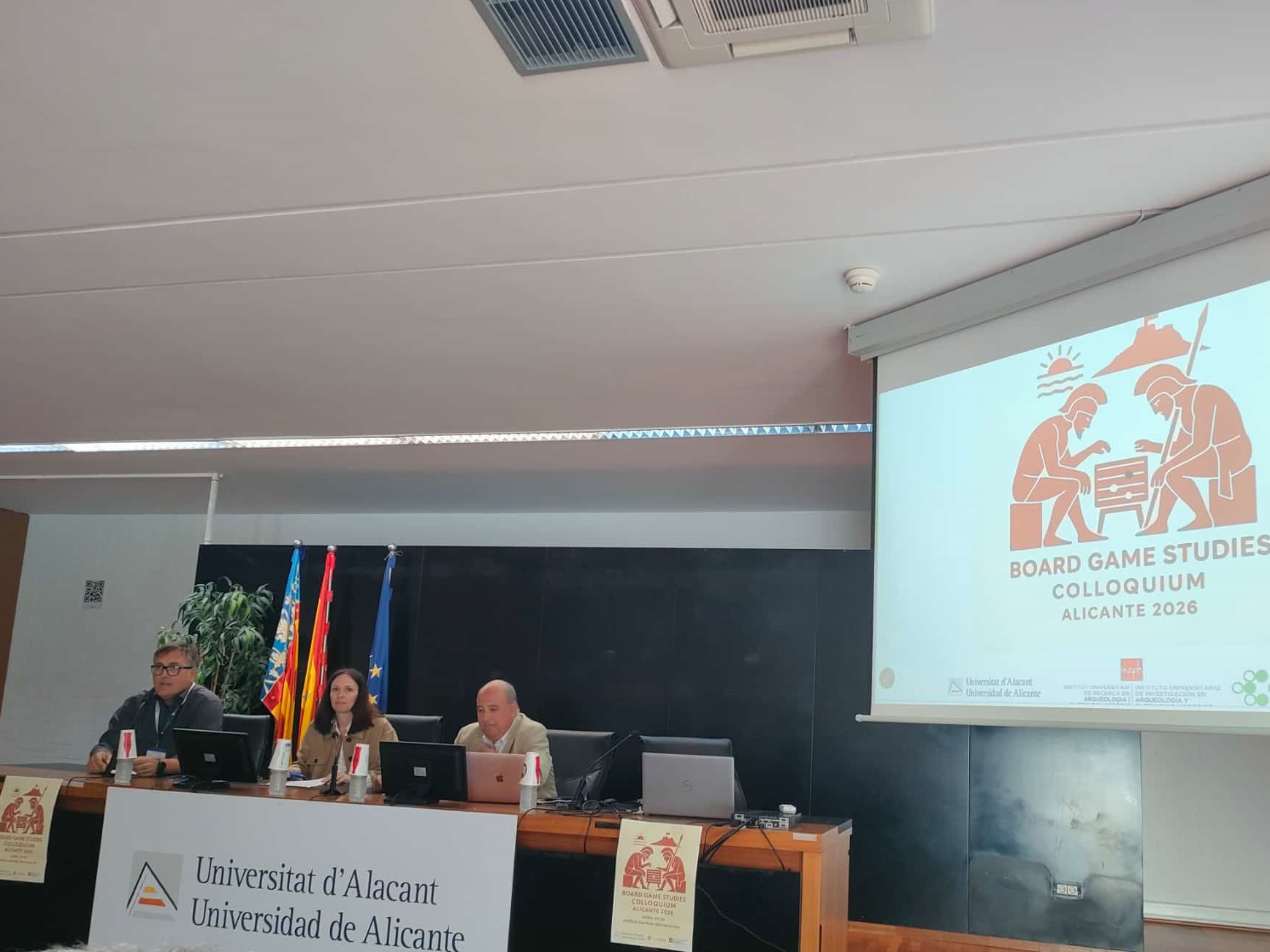
In 2026 the Board Game Studies Colloquium will be held in Alicante, Spain, in cooperation with the Universitat d’Alacant.
Alicante is the current Spanish Capital of Gastronomy.
The region holds the highest concentration of board game evidence from the pre-Roman period, which made it possible to organize an exhibition in 2021 on the relationship between the Iberians and games. To this end, the region’s network of museums showcases numerous examples of game sets dating from the 4th century BCE to the Roman era. In addition, the international conference “Warriors at Play” was subsequently held, focusing on the relationship between warfare and board games in the classical and Roman worlds. You can freely access the exhibition catalog, here and the conference proceedings, here.
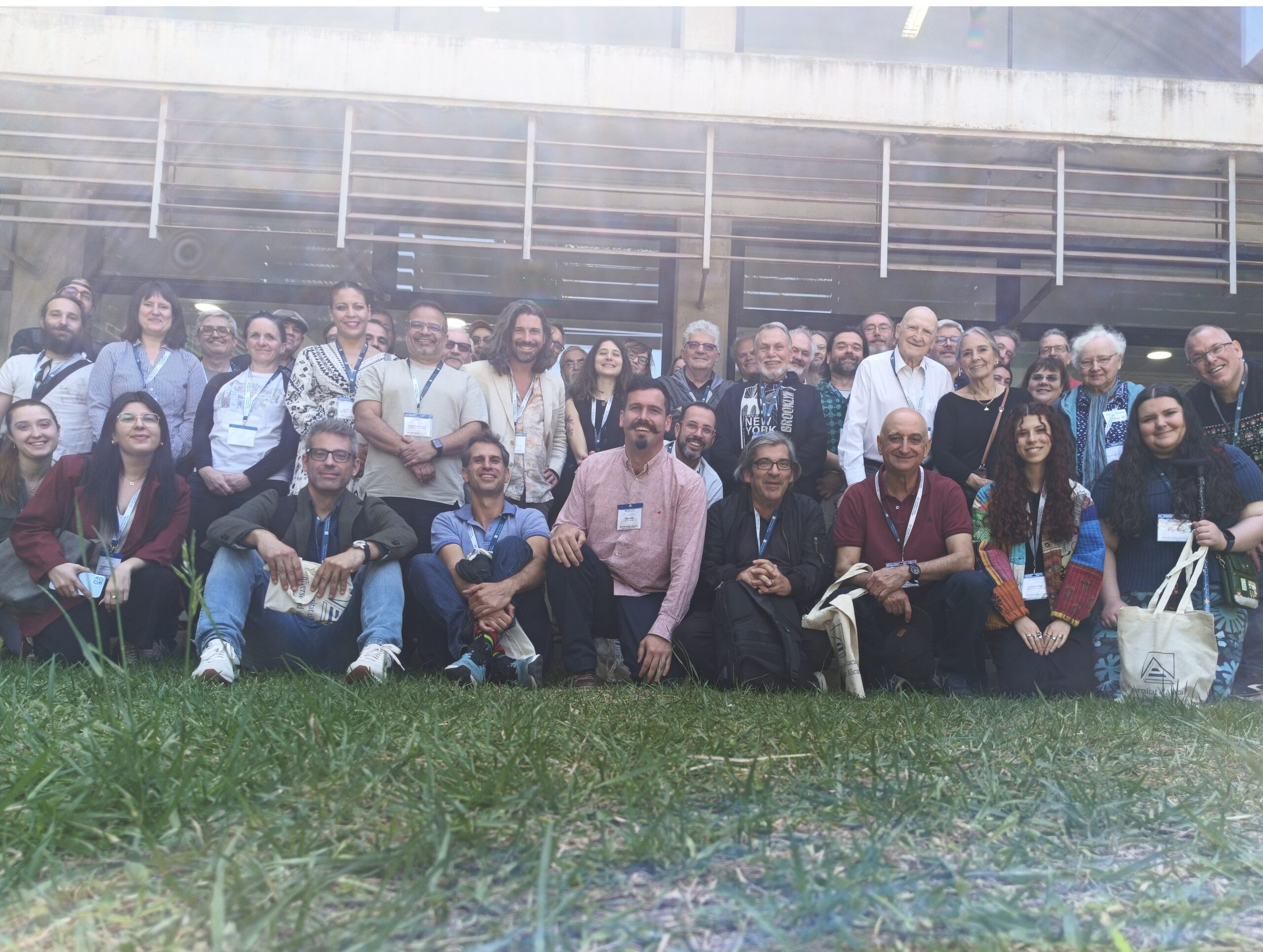
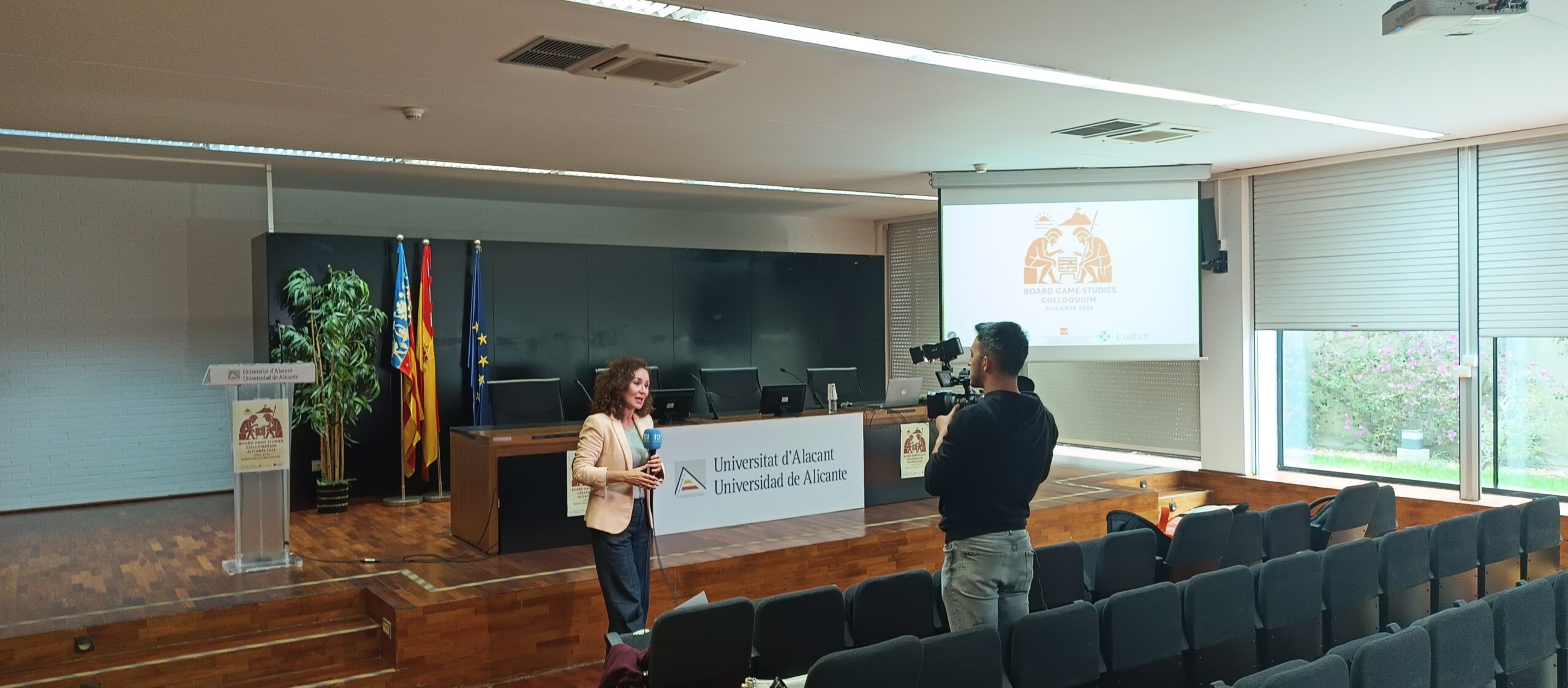
For a journalistic piece on the XXVIII BGSC by the University of Alicante see here and a local TV piece here.
We will meet at:
Edificio Germán Bernacer
Room GB/1002
03690 Sant Vicent del Raspeig
Spain
With the Support of


Local Organizers
Raimon Graells i Fabregat, Universitat d’Alacant
Ángela Pérez García, d’Alacant and Università degli Studi di Salerno
Pablo Camacho Rodríguez, Universitat d’Alacant
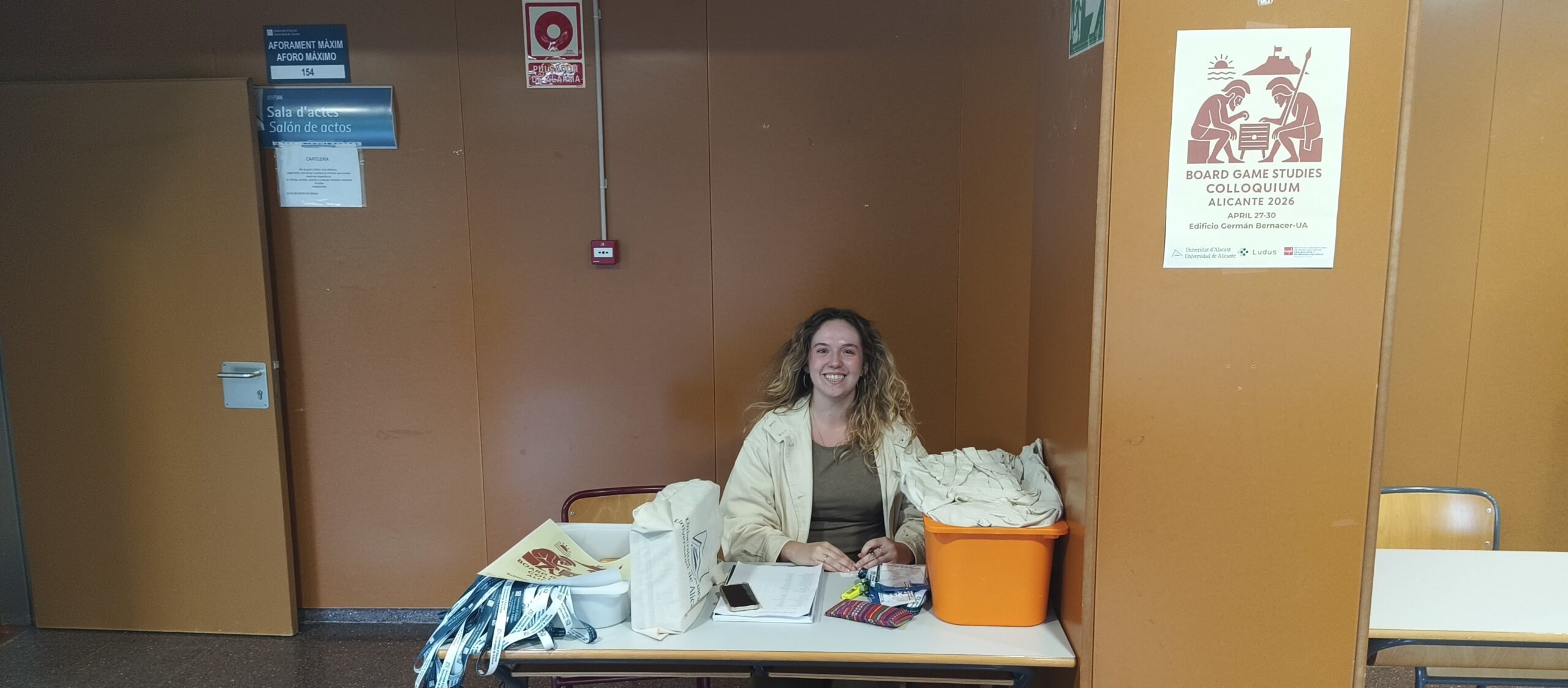
With thanks to the volunteer:
Natalia Rubio Giner, Universitat d’Alacant
Remote Organizers
Ilaria Truzzi, University of Reading (UK)
Tiago Hirth, Ludus (Portugal)
Scientific Committee
Alex de Voogt, Professor at the Drew University (USA)
Marco Tibaldini, University of Bari (Italy)
Ömer Fatih Parlak, Fatih Sultan Mehmet University (Türkiye)
Jorge Nuno Silva, Professor Emeritus at the University of Lisbon (Portugal)
Raimon Graells i Fabregat, Universitat d’Alacant (Spain)
Ulrich Schädler, Director Emeritus of the Musée Suisse du Jeu (Switzerland)
April 27, Monday
- 09:00 — Registration Desk Opens
- 09:30 — Opening session: Teresa Lana Villarreal, José Maria Ferri Cull, and Raimon Graells i Fabregat (University of Alicante)
- 09:50 — Session 1
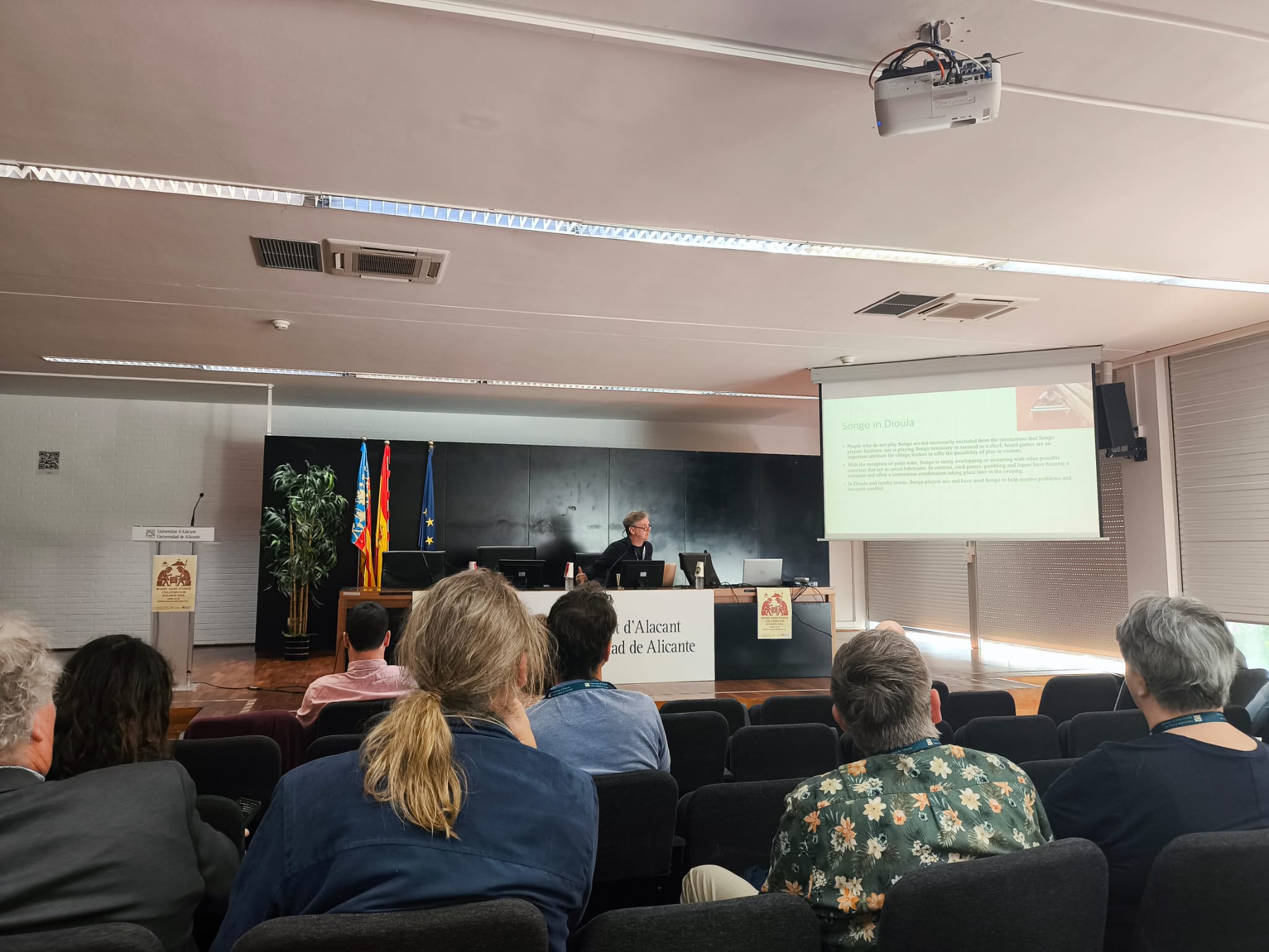
- Games in South Eastern Cameroon: navigating conflict – Alex de Voogt (Drew University)
- Knucklebones in the Iberian World: An Elusive Game – Miguel F. Pérez Blasco (Museo Arqueológico y de Historia de Elche)
- 10:50 — Coffee Break
- 11:20 — Session 2
- Games in Transition, Board Games in the Federal Republic of Germany (1949 to 2000) – Tom Werneck (Bavarian Games Archive)
- Juegos Crone and Rojas y Malaret, two companies that pioneered contemporary board games in Spain – Oriol Comas
- Nike & Cooper (NAC Games): Historical simulation games in Spain, 1980s – Antonio Catalán (Universitat Rovira i Virgili), Jan Gonzalo (Universitat Rovira i Virgili), and Antonio José Planells de la Maza (Tecnocampus-UPF)
- 12:40 — Lunch Break
- 14:20 — Session 3
- Dutchmen at war? The magnum opus of Wim van Mourik, Arie van der Stoep and Jan de Ruiter – Liuwe H. Westra (University of Groningen) and Marten Walinga
- Chessboards: Indo-Portuguese Typologies, 16th-17th Centuries – Patrícia Cabaço (NOVA University of Lisbon)
- 15:50 — Tea break
- 16:20 — Session 4
- The Knight Tours Designed by King Krishnaraja Wodeyar: War Strategies, Combinatorics, and Verbal Codification – Arjun Bharadwaj (Chanakya University and Prekshaa Pratishtana, Bangalore)
- The Chessboard as Battlefield: War Scenes and Strategic Positions in Şatrancname-i Kebir – Ömer Fatih Parlak (Fatih Sultan Mehmet Vakıf University)
- 17:40 — Showcase: Presentation of “Libro de los Juegos de Ajedrez, Dados y Tablas de Alfonso X El Sabio” – Jose Sanchez (Asociación de Ajedrez Callejero de Guadalajara)
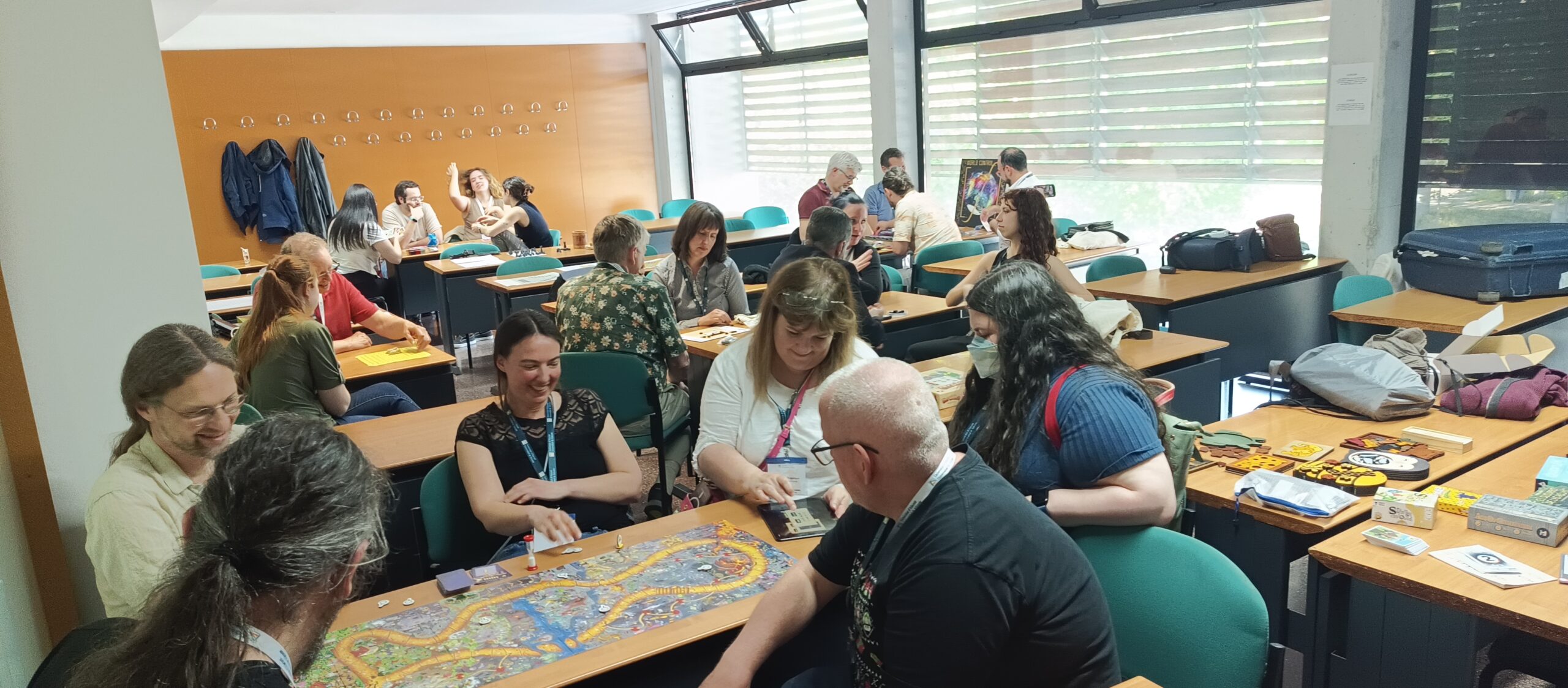
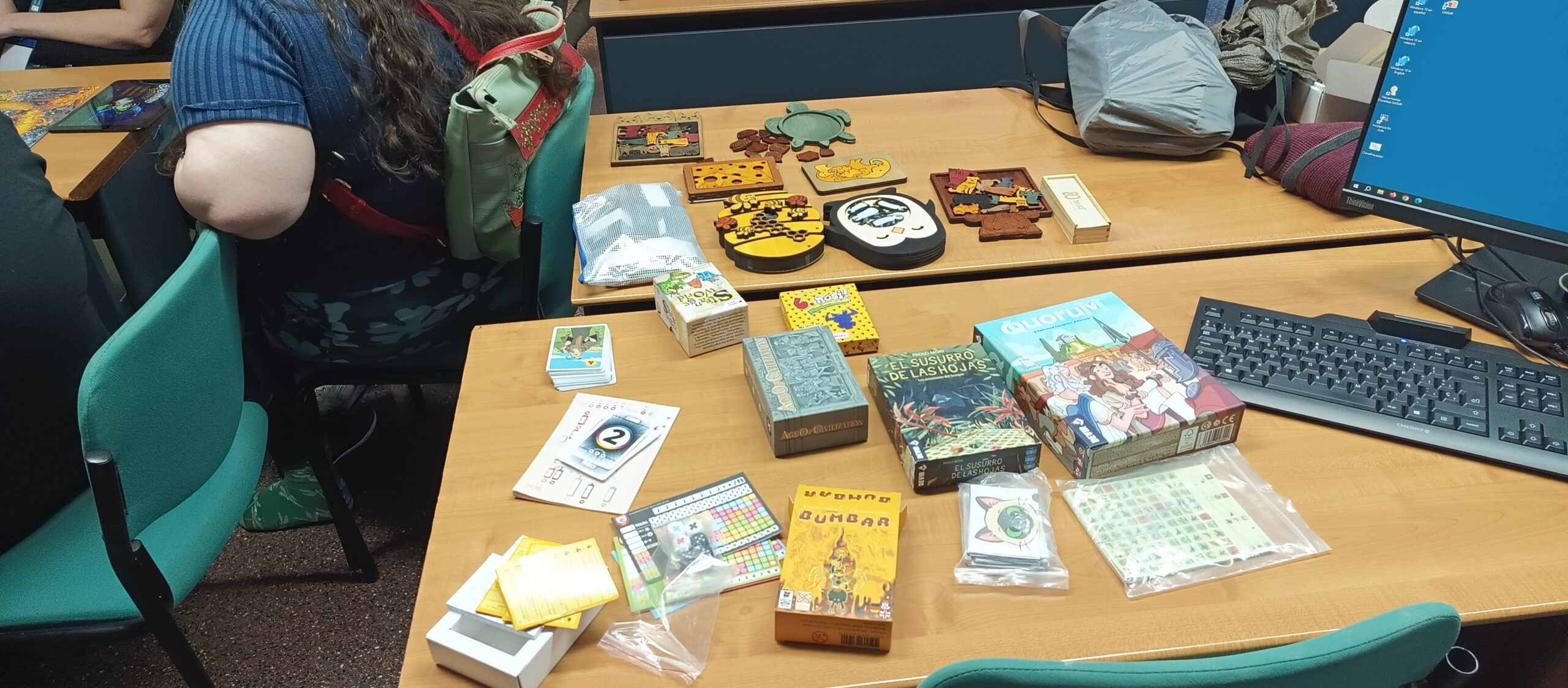
- 18:00 — Informal Game’s Night
April 28, Tuesday
- 09:30 — Session 5
- Fragments of Play: The Liubo Records of Liu He – Fangyi Cheng (Sun Yat-sen University) and Jacob Schmidt-Madsen (Max Planck Institute for the History of Science)
- Gaming equipment from the Roman-period quarter on the north-eastern side of the acropolis of Istros – Liviu Mihail Iancu (The National History Museum of Romania)
- Playing with spheres: Ceramic balls and games in Iron Age Iberian contexts – Pablo Camacho Rodríguez (University of Alicante)
- 10:50 — Coffee Break
- 11:20 — Session 6
- Board Games, War, and the Oracle: Divination, Strategy, and Uncertainty in Play – Joan Josep Pons (Tecnocampus, Universitat Pompeu Fabra)
- Charging into Battle with nothing but a Helmet: Gambling by Warriors in Pre-Modern Japan – Dan Sherer (The Hebrew University of Jerusalem)
- Narrating War from the Board: This War of Mine and the Narrative Experience – Carla Acosta (Universitat d’Alacant) and María Samper (Universitat Miguel Hernández)
- 12:40 — Lunch Break
- 14:20 — Session 7
- Casting Lots – Tracing the origins of chance in ancient texts and challenging the divination narrative – Ivo Herzl (Donau Uni Krems)
- Probability Aspects of Games with Binary Dice in North and South America – Arkady Shemyakin (University of St. Thomas)
- A non-comprehensive catalogue of board games on quantum mechanics – Daniele Aurelio (IIS “Volta”)
- 15:50 — Tea break
- 16:20 — Session 8
- Learning to hunt through board games – Stella Maris Ferrarese Capettini (Alle Kuzen Ethnic Toy Museum)
- Translatio ludorum: from Cercar la liebre to American Hunting – Nicolás Martínez Sáez (Universidad Nacional de Mar del Plata)
- Pachisi, Poleana and Patolli: Resistance and Organized Crime as a Factor in the Unusual Diffusion of Games – Alfonso Atala-Layún
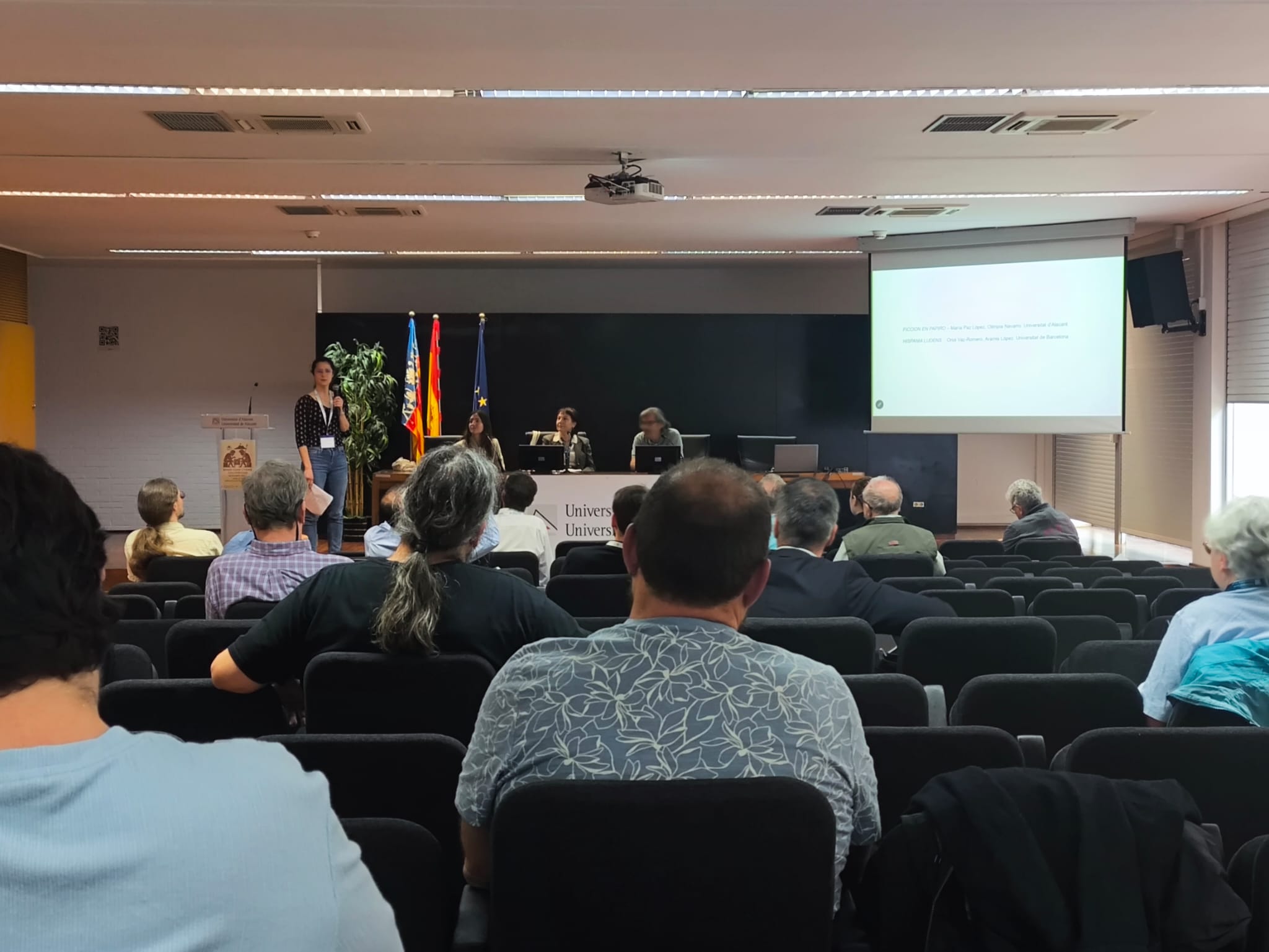
- 18:00 — Showcase: Presentation of the project “Hispania Ludens” – Mari Paz López, Olimpia Navarro, Oriol Vaz-Romero Trueba, and Aramis López (University of Alicante and Barcelona)
April 29, Wednesday
- 09:30 — Session 9
- Asymmetrical Conflict – Bruce Whitehill
- Modeling the Politics of War in Board Games – Mike Cosgrave (University College Cork)
- My Time: Hybrid Card Games for Life Storytelling – Melissa J. Rogerson, Fangxing Zhao, Wei Zhao, Lucy A. Sparrow, and Jenny Waycott (University of Melbourne)
- 10:50 — Coffee Break
- 11:20 — Session 10
- An overview of the pie rule from ancient mancalas to modern board games – Cosimo Cardellicchio (Consiglio Nazionale delle Ricerche)
- Single Player Games and Multiplayer Vexiers: Some considerations regarding puzzle games – Tiago Hirth (Ludus, CIUHCT)
- The meaning of complexity in modern board games – Micael Sousa (CAPTRS)
- 12:40 — Lunch Break
Excursion
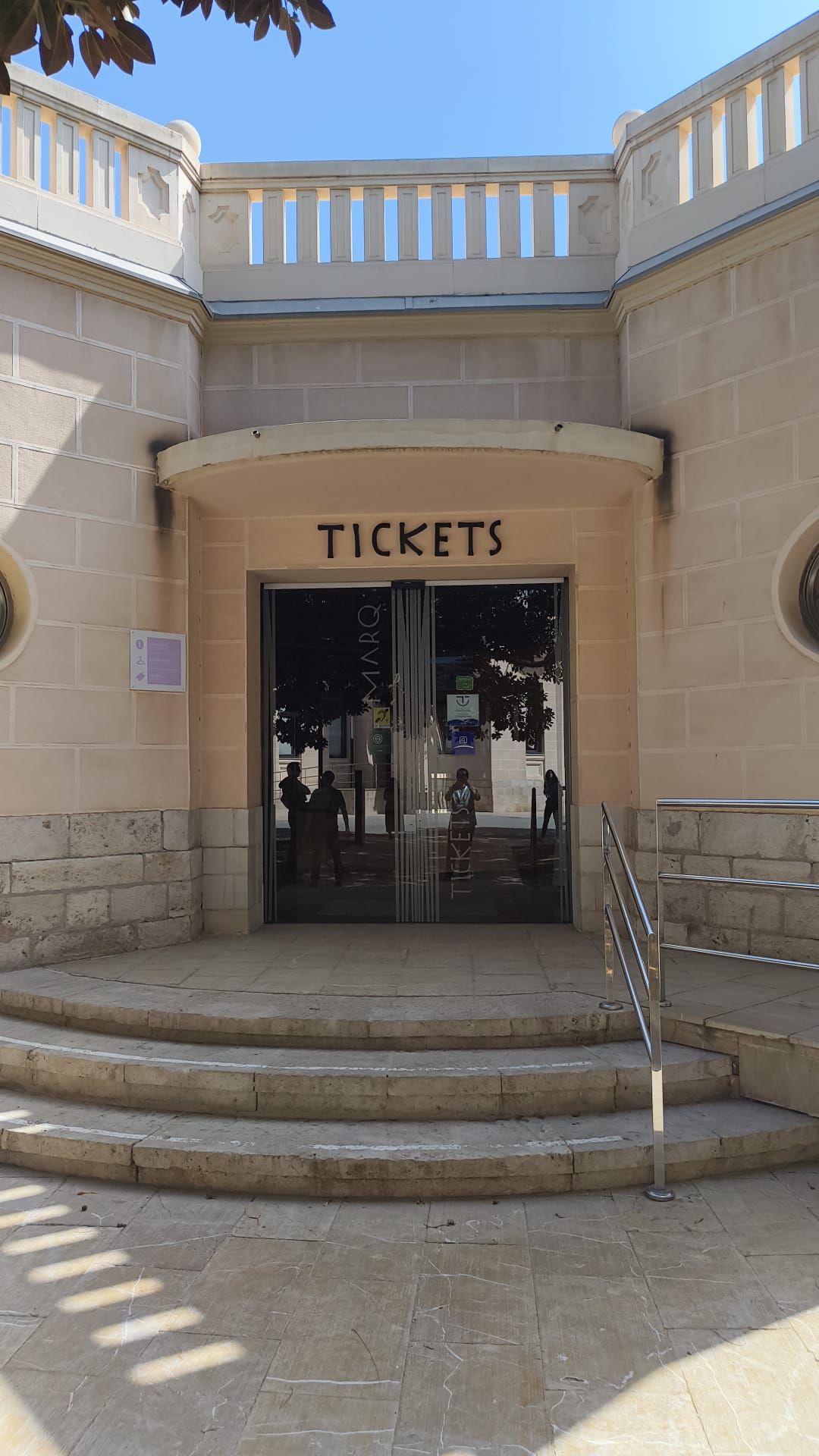
- 16:00 — Excursion: Guided tour at the MARQ Alicante
April 30, Thursday
- 09:30 — Session 11
- Next BGSC – Raghu Dharmendra and Gyaneshwar Singh (Ramsons Kala Pratishtana)
- Ambivalent Public Pedagogy in Pax Pamir 2e: Empire, Memory and Afghan Agency – Corey Wesley (University of British Columbia)
- A Curious “Game Piece” in Appian’s Mithridatic Wars – Atagun Karayel (Sapienza Università di Roma)
- 10:50 — Coffee Break
- 11:20 — Session 12
- Playing Through Crisis: A Microhistory of a Japanese Go Professional – Daniela Trinks (Max Planck Institute for the History of Science, ASTRA) and Akira Maekawa
- Across the Light and Dark Sides of Play. Cooperative Board Games between Pacifism and Agonistic Play – Michael A. Conrad (University of Konstanz)
- The board game in book format: definition and essential characteristics – Pablo Javier Pereira Hurtado (Universidad de Almería)
- 12:40 — Lunch Break
- 14:20 — Session 13
- From Wargaming to Peacegaming (and back) – Pacifism through military games in H.G. Wells’ Little Wars – A Game for Boys – Christian Hoffstadt (Denkhafen, KIT)
- From conquest to collaboration: reconfiguring the meanings of board games in school – Edgard Dias da Silva and Paulo Henrique Amorim Biazoli (Faculdade Sesi de Educação)
- From Conflict to Cooperation: Cultivating Ludic Diplomacy through Cooperative Board Games in the Classroom – Cornelia Hofmann (University Bielefeld)
- 15:50 — Tea break
- 16:20 — Session 14
- A Study of the Chinese Shuanglu Text Pu Shuang – Kishi Kaori (Osaka Elector-Communication University)
- Board games, dicing, and gambling in pre-Islamic Java (8-15 th c. CE):
a look from the Maritime Silk Route – Jiri Jakl (Palacky University) - Piece: The evolution of a neo-latin ludonym from antiquity to the Renaissance – Marco Tibalidini (University Bari)
- 17:40 — Cloture
Call for Papers
Timeline
Deadline: 21 December 2025.
Response: Early 2026
Publication of the program: March 2026.
Presentation Guidelines
Slides: PowerPoint, Keynote-type, PDF.
Lenght of the talks: 20 minutes.
Language: English (let us know in case you are considering to present in a different language)
Evaluation
The papers will be submitted to a blind revision process by the scientific committee taking into consideration: rigor and validity, scientific significance and innovation, and, relevance and implications of the work submitted.
Topics
For the 28th edition of the Board Game Studies Colloquium, we invite participants to engage with the following themes:
- After the collapse, Archaeological approach to Board Games revisited
- Games in Spain from Antiquity to early modern times.
- Board Games in times of crisis. Do people keep on playing?
- Are we learning? Education through games, GBL, Gamification, Serious Games, …
The main topic: Board Games and WarPlay and war are deeply intertwined, linked by more than mere coincidence in time and space. They represent two dimensions of human competition and identity that counterbalance one another.
History also shows that war and military activity have often acted as catalysts for the development of games. Ancient sources attribute the invention of certain games to Palamedes during the siege of Troy. Likewise, the image of Ajax and Achilles seated and playing a game board became an enduring icon of Greek ethos, embodying strength and restraint, intelligence and ferocity. According to classical sources, board games were used both to train and entertain officers and soldiers during long periods between battles. They served to stir or soothe emotions, providing both provocation and relief. Beyond the battlefield, these games could also act as instruments of political elements and cultural practices, resulting in a unified language that transcends cultural and linguistic boundaries, thereby fostering inclusivity and diversity.
Some years ago (2021), the Archaeological Museum from Elche and the Department of Prehistory, Archaeology, Ancient History and Greek and Latin Philology (University of Alicante) organized the exhibition Iberian Warriors and Games, alongside the international conference Warriors at Play. Both initiatives emerged from the same line of research, aimed at exploring the figure of the pre-Roman Iberian mercenary and his connection to Mediterranean board games, linked to graves of high-status Iberian warriors. The findings were striking, revealing that this association recurs across multiple contexts and ancient cultures, and even extends into medieval and modern times.
The interplay between play and war is complex, and one that we are committed to investigating further. During the 28th edition of the Board Game Studies Colloquium our goal will be to identify new case studies in which individuals identified as warriors not only engage in warfare but also practise, collect, or represent themselves through the act of board gaming. Other related themes like how these aspects find themselves to be thematics of and mechanics within games modernly, or how play practice in war times persists are of relevance.
How to Reach & Stay in Alicante
Location
We will convene in the Edificio German Bernacer, of the University of Alicante, accomodation and multiple relevant spots are highlighted in the map below.
The address is as follows: Edificio Germán Bernacer, Room GB/1002, 03690 Sant Vicent del Raspeig, Spain
Travel to and Around Alicante
Flying to Alicante
Alicante can easily be reached by air via the Alicante-Elche Miguel Hernandez Airport, which has frequent national and international connections. The airport is located about 15 minutes from the city centre and the university, with buses, taxis, and car rentals readily available.
Railway & Tram
The C-3 commuter train line (RENFE) connects Alicante with San Vicente del Raspeig, stopping near the UA campus (about 600 m from the main facilities).
The TRAM Line L-2 (Luceros ↔ San Vicente del Raspeig / Universidad) provides a direct connection between Alicante city and the University. The stop “Universidad” is right on campus.
Schedule information and fares for the tram can be found here: Tram schedules & journeys.
By Car
The university is close to the A-70 motorway and is easily accessible by car. Visitors will find signposted exits for the campus, and parking facilities are available.
Suggestions for the accommodation
Next to the University of Alicante a short distance from the conference rooms and around 10 minutes from the city center by public transport there are two recomendations.
Villa Alojamiento y Congresos Villa Universitaria which offers short-stay accommodation year-round for teaching staff, cultural and sports groups.
A more upscale solution is the Univera Hotel. Also situated close to the university campus they advertise superior rooms that offer a comfortable stay and premium amenities.
Other options are also available in town but might include a daily commute and are more removed from the meetings comunity and activities.